Pest control in Florida: licenses, termites and wildlife
In Florida, putting anything in, on or under your home to kill or keep away pests is “pest control”, and it takes a state license from FDACS. Termite contracts and wildlife have rules of their own.
Does it need a license in Florida?
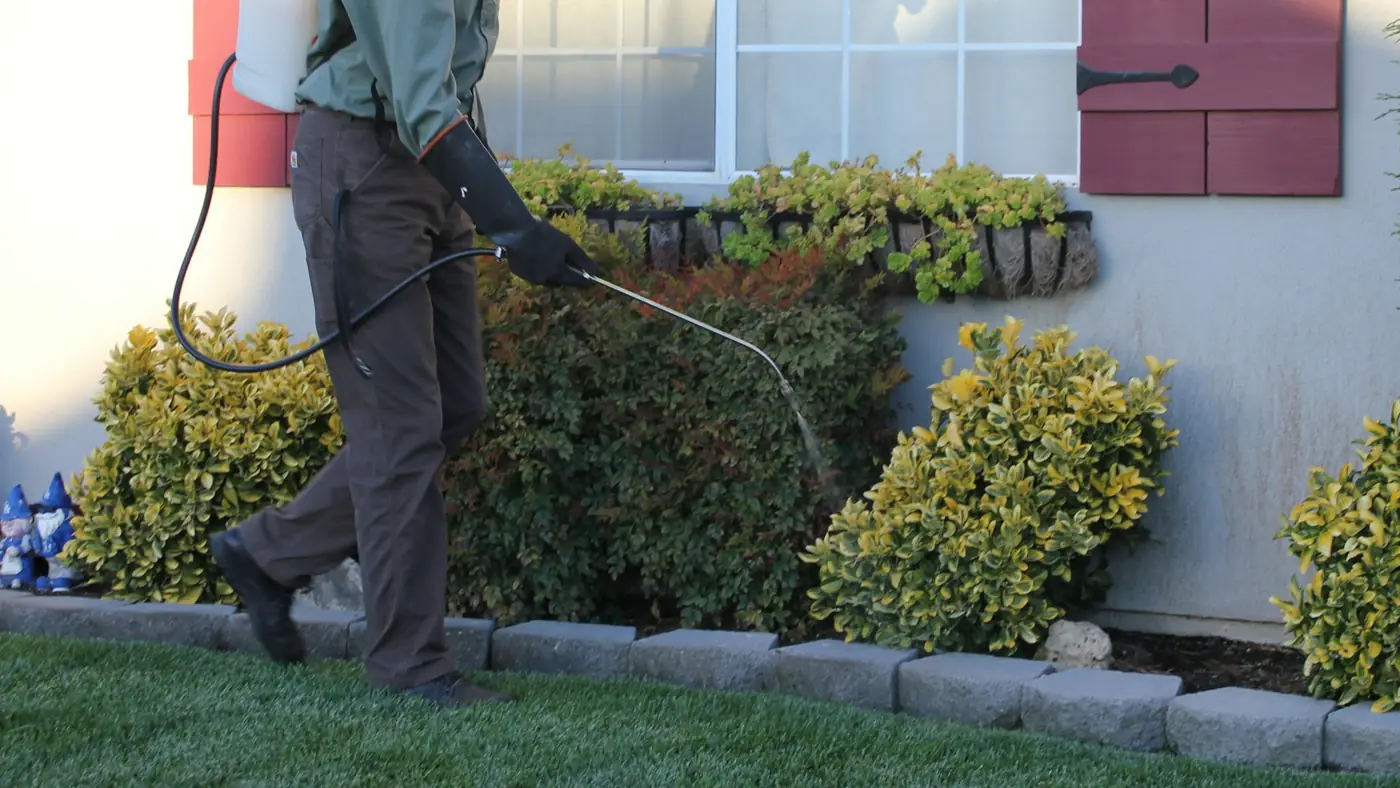
Yes. Florida law counts any method, device or product used to kill, repel or control pests in, on or under a home, a lawn or ornamental plants as “pest control”. Pests include insects, termites, rats, mice and squirrels. Running a pest control business without a license from the Florida Department of Agriculture and Consumer Services (FDACS) is illegal.
The work comes in categories, and the company needs a certified operator for each one it does:
- General household pest control: ants, roaches and other pests in and around the house.
- Termites and other wood-destroying organisms.
- Lawn and ornamental: pests of lawns, shrubs and trees. See our lawn care page.
- Fumigation: tenting a whole house.
Every person who does pest control must be an employee of the licensed company, not an independent contractor, and carry an FDACS ID card with a photo.
How to check
- Find the company in the Pest Control Business Licenses report on the FDACS licensing site, or call FDACS at 1-800-435-7352.
- At your door: ask to see the technician’s FDACS ID card. They must carry it and show it when you ask.
- Ask what they’ll use. If you ask, a licensed company must tell you the business name, the technician’s ID card number, the pesticide’s name, its active ingredient and its safety information.
Termites: read page one
- The contract. A contract to treat termites must say on its first page, in bold, whether it covers repair and retreatment, retreatment only, or no warranty. Any limits or exclusions must also be flagged in bold on page one. With limits, it can’t call itself a “full” or “unlimited” warranty.
- After each visit, the company must give you a signed report saying whether termites were found, whether it treated, and with what product.
- Buying a home? A termite (WDO) inspection for a sale goes on a state form. It lists the areas the inspector couldn’t reach, and it isn’t a guarantee unless it says so.
Wildlife: other rules
Wild animals are mostly the job of the Florida Fish and Wildlife Conservation Commission (FWC). Bats are a good example:
- It’s illegal to kill bats in Florida, and poison may not be used to harm or drive them off.
- From April 16 to August 14, the maternity season, it’s illegal to install bat exclusion devices without a permit. Fall is the time to get bats out and seal the house.
Before you hire
- Get the plan in writing: which pests, which areas, how often and the price.
- Ask about kids and pets: what to keep away from, and for how long.
- For termites, read the first page of the contract twice, and keep every visit report.
- Spraying the lawn too? Lawn pests are their own category. Ask whether the company is certified for lawn and ornamental work.
Need a pro for this?
Tell us what you need and see local pros near you, with photos of their work. Then message them on WhatsApp. Free, no sign-up.
Sources
- Florida Statutes §482.021: what counts as pest control
- Florida Statutes §482.071: pest control businesses need a license
- Florida Statutes §482.091: ID cards for pest control workers
- Florida Statutes §482.111: certified operators and their categories
- Florida Statutes §482.226: termite inspection reports
- Florida Statutes §482.227: termite guarantees and warranties
- Florida Statutes §482.2265: consumer information on pesticides
- FDACS: licensing portal
- Florida Fish and Wildlife Conservation Commission: bats
- Florida Fish and Wildlife Conservation Commission: nuisance wildlife permits
This page is general information, not legal advice. Rules change and differ from city to city, so check the official links and ask your city or county.