Junk removal in Florida: haulers, dumping and old appliances
Hauling away junk needs no state license in Florida, as far as the state’s list shows. What matters is where it goes: dumping it for pay anywhere but a legal site is a felony, and some items have rules of their own.
Does it need a license in Florida?
There is no state license for junk removal or hauling, as far as the license list of the Florida Department of Business and Professional Regulation (DBPR) shows.
Counties can still regulate haulers. In Miami-Dade, for example, a business that collects and hauls trash with one truck needs a small hauler permit from the county’s solid waste department, and its truck must show the company name, phone number, permit number and business tax receipt number on both sides (2023 fact sheet). Ask your county what applies where you live.
Tearing something down is different. Demolishing a building, even a shed, usually needs a permit. Martin County, for example, has a demolition checklist that starts with the permit application. And under Florida’s contractor law, demolishing buildings is contractor work. See our remodeling page.
How to check
- The truck and the paperwork: look for the company name on the truck and on the receipt.
- County permit: where your county requires one, ask for the hauler’s permit number.
- Where it goes: ask which landfill, transfer station or recycler they use.
Where your junk goes
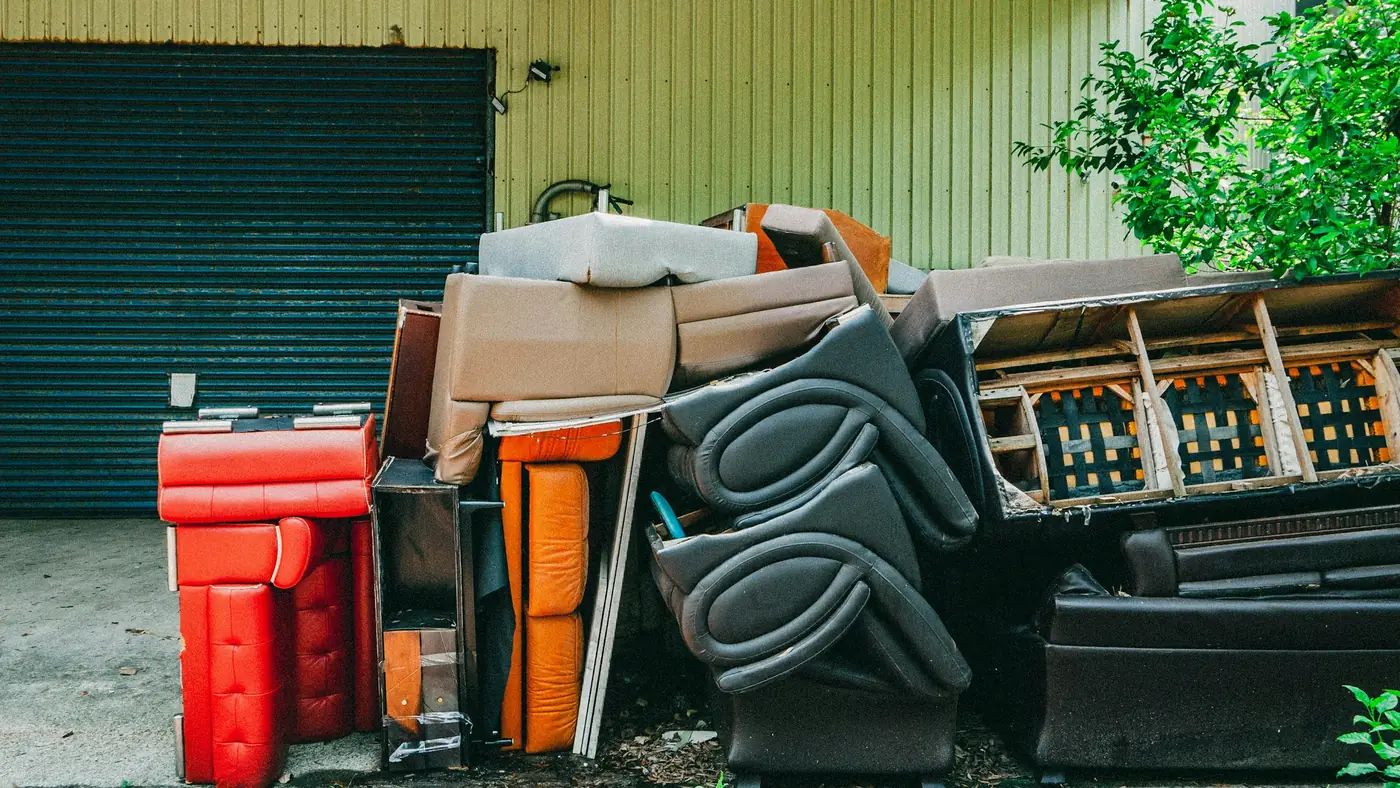
Dumping litter for a commercial purpose, in any amount, is a third-degree felony under Florida’s litter law, and so is dumping hazardous waste. A hauler who takes your money and leaves your sofa on a back road is breaking the law.
Some things need special handling:
- Fridges, freezers and window AC units. Their refrigerant must be recovered before they’re scrapped. Under EPA rules, the last stop, such as the scrap recycler or the landfill, must make sure that happens.
- Paint, chemicals, batteries and electronics. Your county may run drop-off sites for household hazardous waste. Ask the hauler whether they take these items, and where they go.
- After a storm, your county may run its own debris pickup with separate piles. Check before you pay to haul storm debris.
Before you hire
- Get the price in writing, by volume or by item, and ask what’s extra: stairs, heavy items, mattresses or tires.
- Point out what stays. Walk the job with them and mark what goes, so nothing goes by mistake.
- Ask for a receipt with the company name and the date.
Need a pro for this?
Tell us what you need and see local pros near you, with photos of their work. Then message them on WhatsApp. Free, no sign-up.
Sources
- Florida DBPR: the professions it licenses
- Miami-Dade County: small hauler permit fact sheet (PDF, 2023)
- Martin County: demolition checklist
- Florida Statutes §489.105: demolition of buildings is contracting
- Florida Statutes §403.413: the Florida Litter Law
- U.S. EPA: safe disposal of fridges, freezers and window units
This page is general information, not legal advice. Rules change and differ from city to city, so check the official links and ask your city or county.